Currently Empty: R0.00

Water pH Levels: Why They Matter for Your Health and Home
Water pH levels play an important role in the quality of the water you drink every day. Whether your water comes from a municipal supply, a borehole, or a rainwater harvesting system, its pH can affect its taste, plumbing, appliances, and overall water quality. Understanding water pH levels helps you identify potential problems and choose the right water treatment solution for your home or business.
What Are Water pH Levels?
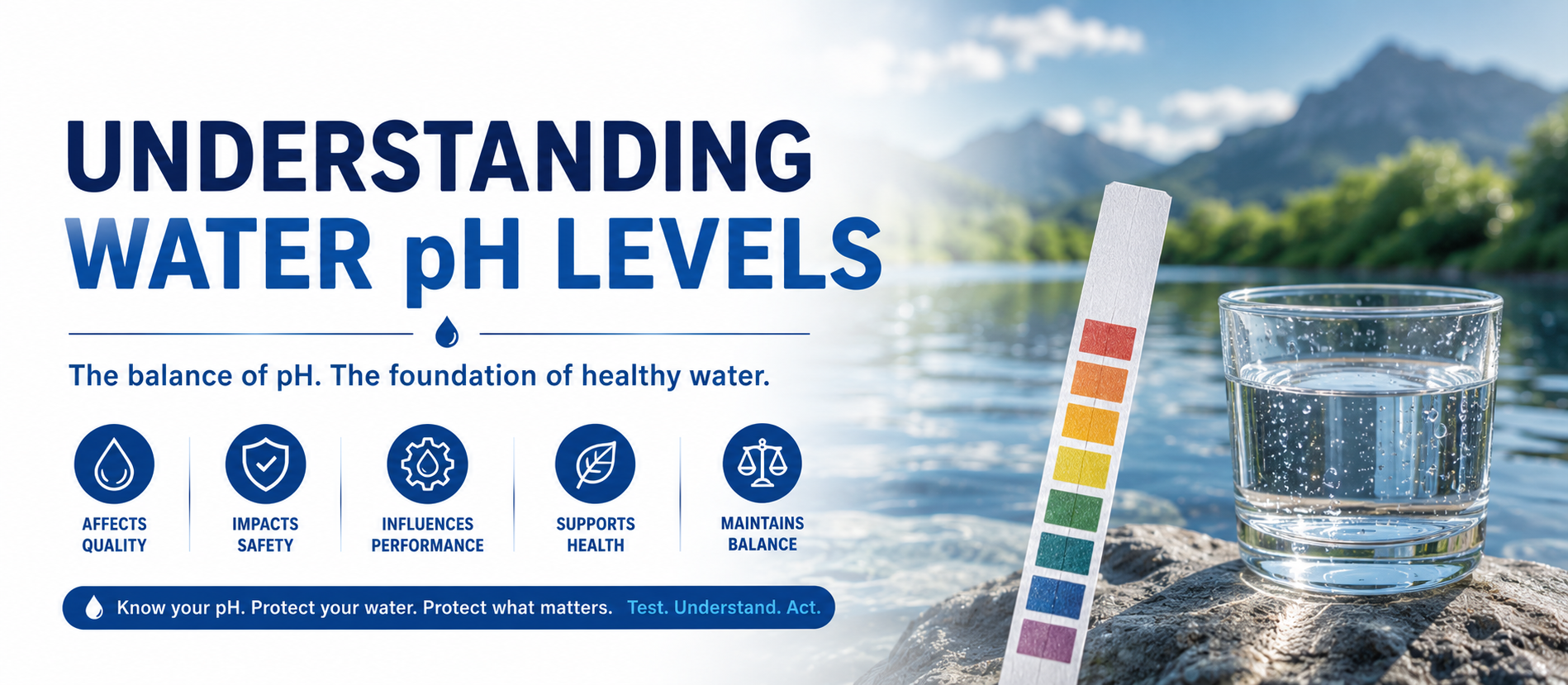
The term pH stands for “potential of hydrogen” and measures how acidic or alkaline water is. The pH scale ranges from 0 to 14:
- pH 7 is neutral.
- Below 7 is acidic.
- Above 7 is alkaline (basic).
Most drinking water falls between 6.5 and 8.5, a range generally considered suitable for drinking and plumbing systems. Water outside this range can cause corrosion, scale build-up, or affect taste.
How Water pH Levels Affect Your Health
Balanced pH contributes to better-tasting water and supports overall water quality. Water that is extremely acidic may have a metallic or sour taste, while highly alkaline water can taste bitter or leave a slippery feeling.
Although drinking water pH has little direct effect on the body’s overall pH, very acidic water may increase the likelihood of metals such as lead or copper leaching from old plumbing.
Water pH Levels and Your Plumbing
One of the biggest impacts of water pH levels is on household plumbing.
Acidic water can:
- Corrode pipes
- Damage taps and fixtures
- Increase the risk of metal contamination
- Shorten the lifespan of appliances
Highly alkaline water can:
- Cause limescale build-up
- Reduce appliance efficiency
- Block pipes and fittings
- Increase maintenance costs
Maintaining balanced water chemistry helps protect your plumbing investment.
Common Causes of pH Imbalance
Several factors influence water pH levels, including:
- Natural minerals in soil
- Borehole water composition
- Heavy rainfall
- Industrial pollution
- Agricultural runoff
- Ageing plumbing systems
Regular testing helps identify changes before they become costly problems.
Testing Your Water pH
Testing is quick and affordable.
Common methods include:
- pH test strips
- Digital pH meters
- Professional laboratory analysis
If you notice unusual taste, staining, corrosion, or excessive scale, testing your water is a good first step.
How to Correct Water pH Levels
Different treatment systems help balance water depending on whether it is too acidic or too alkaline.
Common solutions include:
- Neutraliser filters for acidic water
- Reverse osmosis systems with remineralisation
- Alkaline post-filters
- Professional water treatment systems designed for your water source
The correct solution depends on your water quality results and treatment goals.
Benefits of Balanced Water
Maintaining balanced water pH levels offers several advantages:
- Better tasting drinking water
- Reduced pipe corrosion
- Less scale build-up
- Improved appliance lifespan
- Greater confidence in your water quality
Routine testing and proper treatment help ensure consistent performance throughout your home or business.
Conclusion
Understanding water pH levels is an important part of maintaining clean, safe, and reliable water. Regular testing, combined with the right water treatment solution, can improve taste, protect plumbing, and extend the life of household appliances.
Whether you use municipal, borehole, or rainwater, monitoring your water’s pH helps ensure the best possible water quality every day.